Orvain · Inland Marsh
DRETH HOLLOW
Dreth Hollow does not lack order.
It lacks clean authority.
The settlement survives through uneven systems of work, repair, exchange, reputation, leverage, and consequence. No single authority protects the whole of it.
Low basin / East of Ridgewatch
The Ground
The ground asks for work before anything can stand on it.
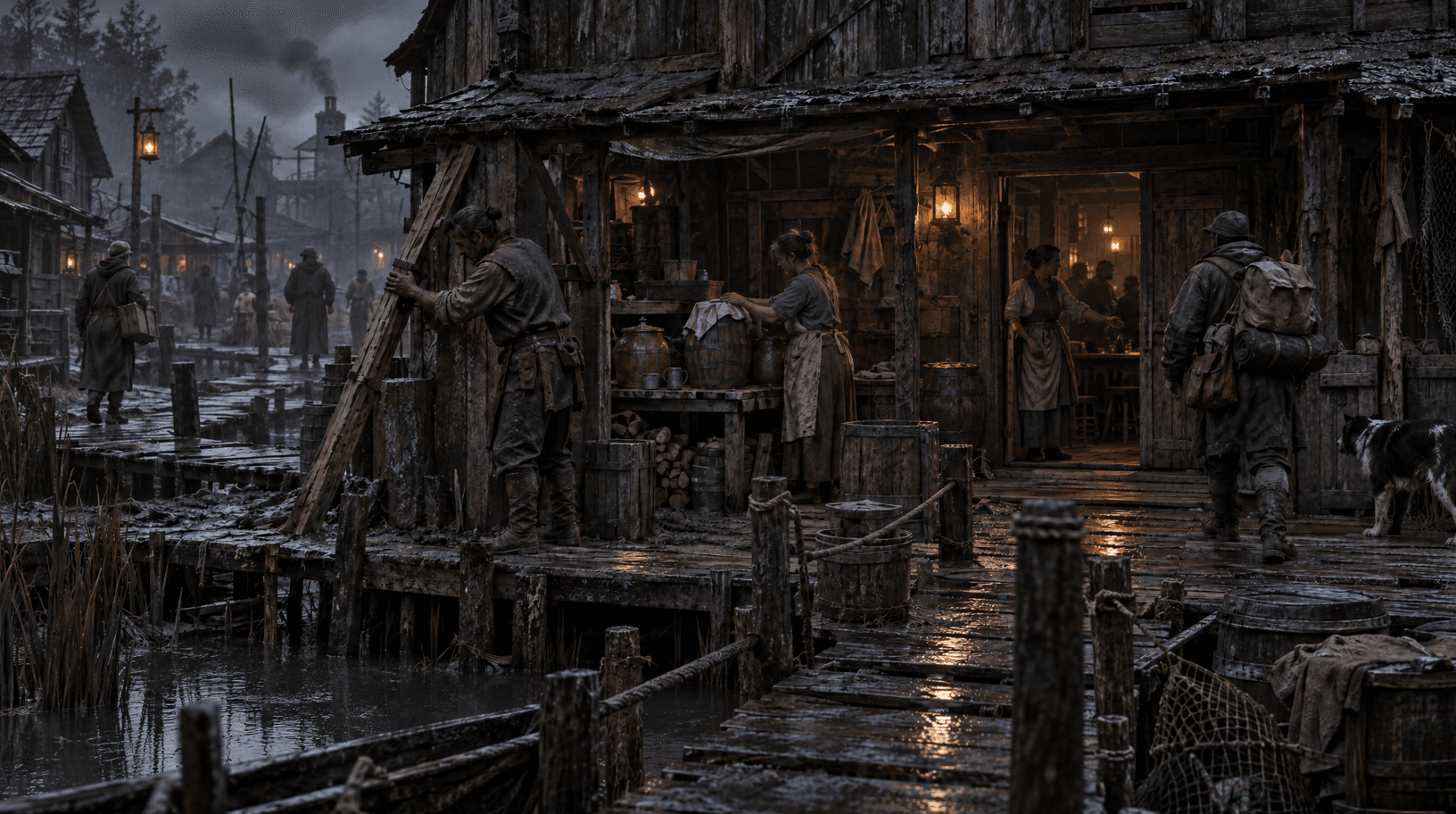
Dreth Hollow occupies a localized low marsh basin east of Ridgewatch. Standing water, soft ground, humidity, and poor drainage put constant pressure on timber and supports. Damp rot and weather make repairs temporary; narrow built routes connect what the ground keeps apart.
A broken walkway changes more than a journey. It can isolate a household, divert work past someone else’s door, or make an alternative crossing valuable. Someone gains visibility. Someone controls access. Someone has to ask for help.
Patchwork repairs and uneven sightlines are part of daily life. Infrastructure shapes who meets, who waits, and who gains leverage.
Labor / Exchange / Dependency
What Keeps It Standing
People keep making damaged systems work.
Repair and material production keep tools, supports, and fittings useful. Marsh harvesting and local exchange help sustain households. Transport and storage make what is available accessible to someone who needs it.
None of this works alone. Labor needs materials; materials need a route. Information, protection arrangements, and access can matter as much as the goods being moved. A favor can keep work moving and leave a debt behind.
Most people in Dreth Hollow depend on someone they do not fully trust.
Capacity / Access / Local stability
Local Powers & Networks
Different kinds of influence hold different parts of the settlement together.
Material capacity / Controlled function
Blackworks
Blackworks is a disciplined local material-control operation and an important node for production and repair. Worked metal, tools, fittings, and weapons and armor repair give it a finished material capacity that is difficult to replace.
That capacity gives it leverage. Uncontrolled disruption threatens work and survival, so maintaining functional conditions serves its interests. Its stabilizing influence comes from what it can produce, repair, and control.
Slagmark
Slagmark is the controlled cliffside works territory where Blackworks operates. Cave-like working spaces, furnaces, stored material, worked inventory, and guarded access support its production infrastructure.
Repairs / Favors / Shelter
Patchwork
Patchwork is less a formal organization than a web of repairs, favors, shelter, information, and leverage associated with Rael Patch.
These connections can provide practical stability inside Dreth Hollow’s uneven systems. Their value lies in people being able to find help, make an arrangement, or keep something working.
Other pressures come from predatory crews, extortion groups, debt enforcers, and opportunistic local actors. Their demands can unsettle the same relationships that keep daily life possible.
Partial observation / Public consequence
Watched,
Not Governed
You may be seen without knowing who saw you.
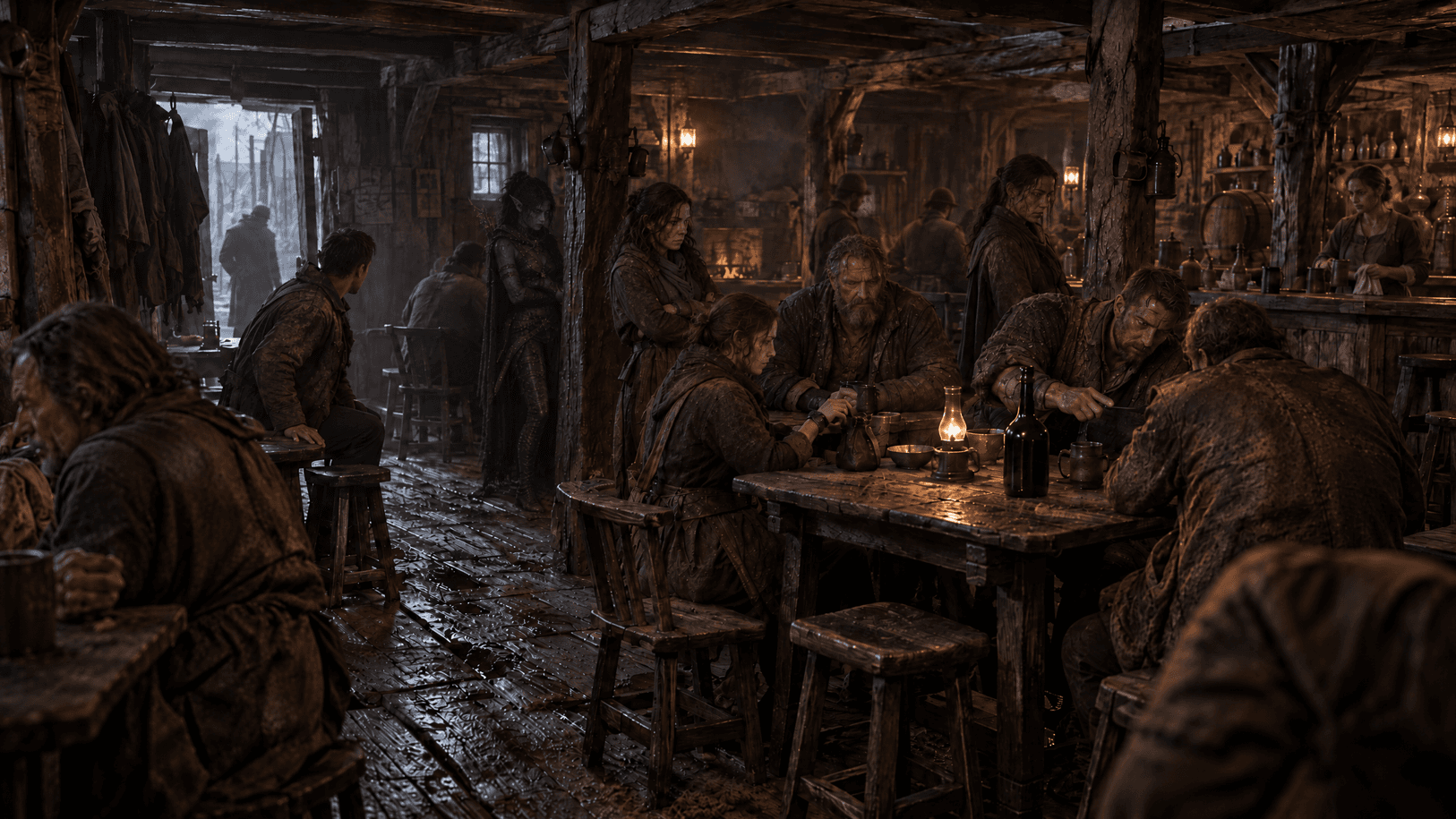
Residents, workers, vendors, lookouts, children, and debt holders each notice different things. Some pretend not to watch. Others pay attention because missing a change can be dangerous.
There is no central surveillance system and no complete view. A witness may see only part of an exchange. What they repeat can become rumor, alter a reputation, create an obligation, or raise the risk of retaliation.
Being visible does not mean being understood. Being unwitnessed cannot always be assumed.
Movement / Condition / Permission
Routes Are Social
An open path is not a simple invitation.
Main raised walks, narrow side planks, half-sunk cut-throughs, rope-guided crossings, and marsh-edge paths offer different kinds of passage. Weather, standing water, and the state of a support can change which way is usable.
Debt, local relationships, and controlled approaches shape which way is available to a particular person. Who is watching matters. So does whether the traveler is known.
A stranger reveals unfamiliarity partly through movement: taking an obvious path on trust, moving too directly, or waiting in the wrong place. Knowing a route includes knowing when to avoid it.
People / Within the settlement
People of Dreth Hollow
Vannya
An independent operator whose advantage comes from accumulated knowledge of Dreth Hollow’s routes, reputations, pressures, and behavioral patterns.
Rael Patch
A dark elf and local figure associated with Patchwork, a loose network of repair, favors, shelter, information, and leverage that can provide a more predictable fixed point inside Dreth Hollow’s uneven systems.