Mythic Pulse Studios / Technical practice
SYSTEMS & AI
DEVELOPMENT
Systems designed to remain understandable as they evolve.
Mythic Pulse Studios develops software, automation, AI-integrated systems, and knowledge architectures with an emphasis on continuity, governance, and deliberate system behavior.
The objective is not simply to make a system work today. It is to preserve the intent, context, and structure required to understand it tomorrow.
Engineering Intent
What must remain true
as the system changes?
Requirements describe what a system must do. Architecture also has to preserve why the system is shaped the way it is.
The work begins with the actual problem: the users, responsibilities, system boundaries, dependencies, data ownership, integrations, and constraints that shape it. Future change belongs in that conversation from the beginning.
A system is not complete because it runs. It also has to remain understandable, governable, and maintainable after the person who built it is no longer standing beside it.
Architecture & Integration
Connected systems.
Clear responsibilities.
Applications, data stores, APIs, collaboration platforms, cloud services, and existing enterprise systems often need to cooperate without losing clear responsibility for what each component owns.
Application architecture defines those boundaries. Structured data, databases, and service interfaces give information a clear path between them. Migration and modernization should preserve those relationships while allowing individual parts to change.
Integration should connect systems without turning every component into one unmaintainable dependency chain.
- ExperiencePeople, interfaces, and interaction
- ApplicationBusiness behavior and responsibilities
- ServicesDefined capabilities and integration
- Data / KnowledgeStructured records, context, and ownership
- External systemsPlatforms beyond the system boundary
Across every layer
- Governance
- Identity
- Observability
A conceptual view of related responsibilities, not a reference implementation or a required sequence of calls. Governance, identity, and observability apply across all five layers.
Automation & Workflow
Repetitive process should be automated where automation reduces friction without hiding responsibility.
- Decisions
- Business rules and approvals define when work can proceed and who is responsible.
- Movement
- Documents, data, notifications, and system-to-system actions carry work between stages.
- State & recovery
- User-facing processes and recurring operational tasks need visible status, clear ownership, and a way to recover when work stops.
Workflow orchestration should make ownership clearer. A person taking over the process should be able to understand what happened, what is waiting, and what needs attention.
Implementation may involve Microsoft Power Platform, SharePoint, Microsoft 365, Azure, APIs, SQL, or custom services. The choice follows the process and its boundaries.
AI & Conversational Systems
AI-enabled systems require more architecture than a model call.
An assistant becomes a system when conversation has to interact with memory, permissions, tools, changing system state, external events, and durable context.
Those responsibilities should remain separated enough to be understood, tested, governed, and replaced independently when necessary.
AI participates within a broader architecture of applications, APIs, data, automation, cloud services, knowledge systems, user interfaces, and business processes.
Contextual memory, knowledge retrieval, conversational identity, and tool use each need defined permission boundaries. Structured context, orchestration, and persistence also require deliberate decisions about local and cloud responsibility.
Selected research / Internal R&D
Context-Aware
Assistant Architecture
Internal research exploring persistent conversational identity, contextual memory, event-driven behavior, and interaction across cloud services, software systems, and device-level interfaces.
The work examines how an assistant can maintain relevant context and a stable interaction model while responding to changing system state, external events, tools, and user input without collapsing identity, memory, automation, and device integration into a single monolithic application.
An architecture research direction. No public assistant or live demonstration is offered here.
05 / Durable understanding
Knowledge &
Continuity
Organizations often retain what exists while losing why it exists.
Architectural intent, design rationale, dependencies, rejected alternatives, and integration relationships are part of the system’s knowledge. So are operational knowledge, governance, assumptions, change history, ownership, and the context around each decision.
When rationale disappears, future teams are forced to reverse-engineer their own organization. Durable system knowledge allows change to begin with context instead of archaeology.
Selected system / Enterprise continuity
MACHINA
MACHINA is an enterprise continuity and institutional-memory system focused on preserving architectural intent, governance, system rationale, and durable organizational knowledge.
In use in Mythic Pulse Studios’ tenant. Not offered as a commercially available product.
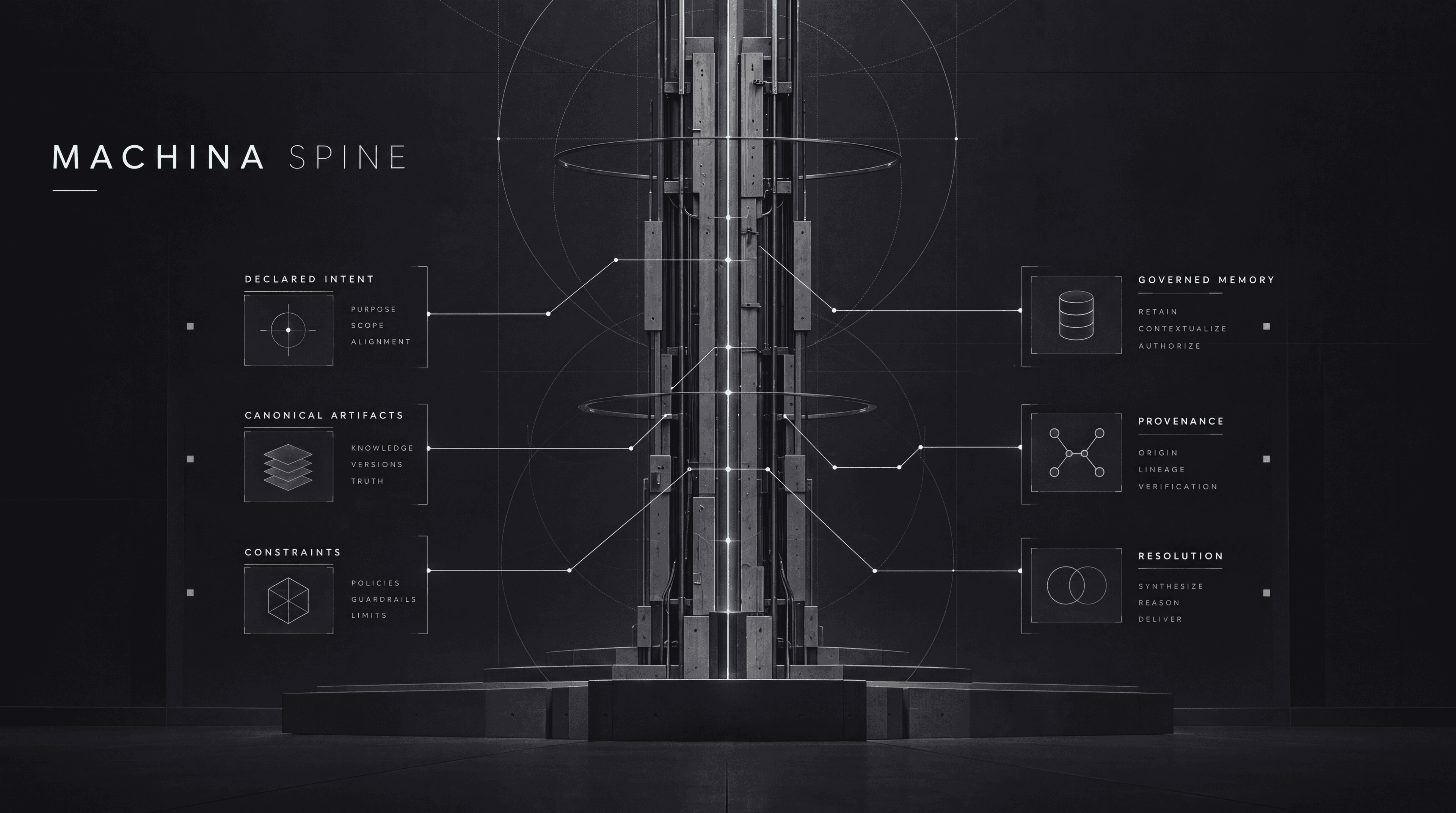
Preserving the work
Applications, tickets, documents, code, and diagrams may survive a transition without preserving the reasoning behind them.
Preserving the relationships
Why was a decision made? What depended on it? Who owned the rationale? What alternatives were rejected? What assumptions existed, and what might future change disturb?
Machina explores ways to preserve these relationships as durable context.
Platform Modernization Without Losing Context
Changing a platform is easy to describe as a destination problem. In practice, the harder question is what must survive the transition.
Migrations and reorganizations involve more than file movement. Data, permissions, workflows, integrations, automation, information architecture, and business processes carry relationships that can be disrupted by structural change.
Operational knowledge and structural ownership need to travel with the work.
The work is to identify what should move, what should change, what should be retired, what relationships must remain intact, and what knowledge must accompany the migration.
A capability and practice area, rather than a named client case study.
How We Build
A working engineering discipline. The sequence adapts to the system, its constraints, and the change it needs to support.
Understand the intent
What problem actually needs solving?
Define the boundaries
What belongs inside the system, what remains external, and who owns each responsibility?
Build the architecture
Define the relationships between applications, services, data, users, and interfaces.
Automate deliberately
Remove repetitive work without obscuring responsibility or recoverability.
Preserve context
Capture enough rationale and knowledge for the system to remain understandable as people and platforms change.
Validate change
Confirm that improvement has not destroyed the behavior, knowledge, or relationships that mattered.
Working Technologies
Technologies serve the architecture. The appropriate combination depends on responsibility, constraints, and the existing environment.
- Microsoft platform
- Microsoft 365
- SharePoint
- Power Platform
- Azure
- Data & integration
- SQL
- APIs
- Structured data
- ERP Integration
- Service integration
- AI & automation
- Conversational systems
- Knowledge retrieval
- Workflow automationPower Automate · Nintex
- Development & collaboration
- Web applications
- Custom tooling
- Google services
Request a Quote
Tell us what you’re working on, what you need help with, and any timing or budget considerations.
Across the studio
A shared discipline.
See how the same principles of identity, intent, and continuity operate across MPS creative and technical work.
Inside the StudioStudio direction
James Capps
Founder / Owner, Mythic Pulse Studios
Systems architecture, automation, AI-integrated development, and knowledge continuity.
About James CappsMythic Pulse Studios LLC
Veteran-owned · Commercially insured